
Google Books Blue Origin’s New Glenn to Launch Project Suncatcher Satellites in Early 2029
Source: blog.google
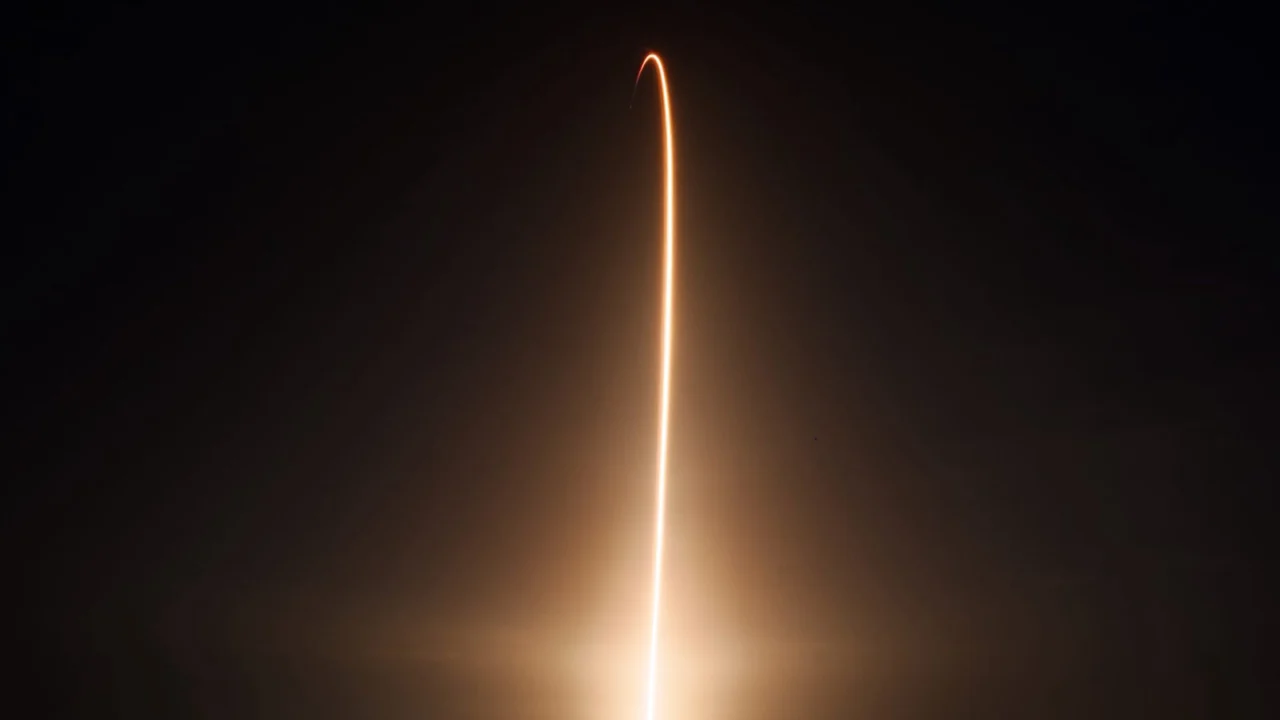
Image: Nattanon Dungsunenarn, public domain via Openverse
Tech news by email, once a week
Unsubscribe any time. Privacy policy
Dedicated New Glenn flight targeted for the first quarter of 2029
Google and Blue Origin announced on November 19 that Blue Origin's New Glenn rocket will carry satellites for Project Suncatcher, Google's long-term effort to build AI computing infrastructure in space. Google calls it the first heavy-lift launch for the project, according to the company's announcement. Launch is targeted for the first quarter of 2029.
Reports on the announcement describe the flight as a dedicated mission, not a rideshare slot. The satellites are to be placed in sun-synchronous orbit, a path that keeps the solar panels in near-constant daylight. That matters for Suncatcher, which is built around powering AI chips directly from sunlight.
What Google and Blue Origin have and have not disclosed
Coverage of the deal says each satellite will carry Google's TPU accelerators, with roughly the computing capacity of one data center rack. Neither company has said how many satellites will fly. Financial terms were also not disclosed, so there is no public price for the launch contract.
The New Glenn booking builds on earlier Suncatcher work with other partners. Google has been developing the project with Planet, the satellite maker, for smaller prototype missions. The heavy-lift flight is a separate and much larger step. Dates for the Planet prototype missions have been reported inconsistently, so the exact status of that earlier hardware is unclear from the public record.
Competition for orbital compute is already forming
Blue Origin is not only a launch vendor in this space. In March 2026 it reportedly asked U.S. authorities for permission to deploy a network of more than 50,000 satellites that would act as a data center in orbit. That filing is a separate effort from the Google contract. It does show that the company supplying Google's rocket also has its own plans for orbital computing.
For Google, a contracted launch gives Suncatcher a calendar date, which is more than most orbital-compute proposals have. For rivals, it raises the bar on credibility. A booked heavy-lift slot on a rocket that has flown is a firmer commitment than a design study.
The project also sits next to a very large terrestrial build-out. Cloud providers are still adding conventional capacity at pace, such as the Vera Rubin systems NVIDIA and Microsoft are widening in Azure. Nothing in the Suncatcher announcement suggests orbital capacity would replace that in the near term.
Open questions about cost, scale and hardware
Several central questions are unanswered:
- How many satellites will fly in 2029, and whether the first mission is a demonstration or a working compute cluster.
- What the launch costs, and how that compares with building the same capacity on the ground.
- Whether TPUs can run reliably in orbit over years, given radiation exposure and the difficulty of shedding heat in a vacuum.
- How satellites in a cluster will talk to each other, which depends on precise formation flying and high-bandwidth links between spacecraft.
- How results would reach users on Earth, and what the service would be used for.
The schedule also carries launch risk. A first-quarter 2029 target is more than two years away, and heavy-lift manifests tend to shift. Google has not said what an AI product running on Suncatcher hardware would look like for customers, or whether it would be offered through Google Cloud. Until the company publishes test results from its prototype missions, the economics of space-based AI infrastructure remain unproven.
Sources:
– [Google partners with Blue Origin on Project Suncatcher heavy-lift launch](https://blog.google/innovation-and-ai/models-and-research/google-research/blue-origin-project-suncatcher-partnership/)
– [Google Orders Heavy-Lift Launch for Project Suncatcher from Blue Origin (Via Satellite)](https://www.satellitetoday.com/launch/2026/11/19/google-orders-heavy-lift-launch-for-project-suncatcher-from-blue-origin/)
– [Google books Blue Origin's New Glenn to launch its AI satellites in 2029 (The Next Web)](https://thenextweb.com/news/google-blue-origin-new-glenn-project-suncatcher-2029)
Featured image: Nattanon Dungsunenarn, public domain via Openverse
Get the week's tech news by email
One email a week with Trendblog's stories on AI, hardware, apps and crypto.
We'll email you to confirm your address. Unsubscribe any time. Privacy policy