

Mazama Energy Raises $135M Series B to Advance Super-Hot-Rock Geothermal

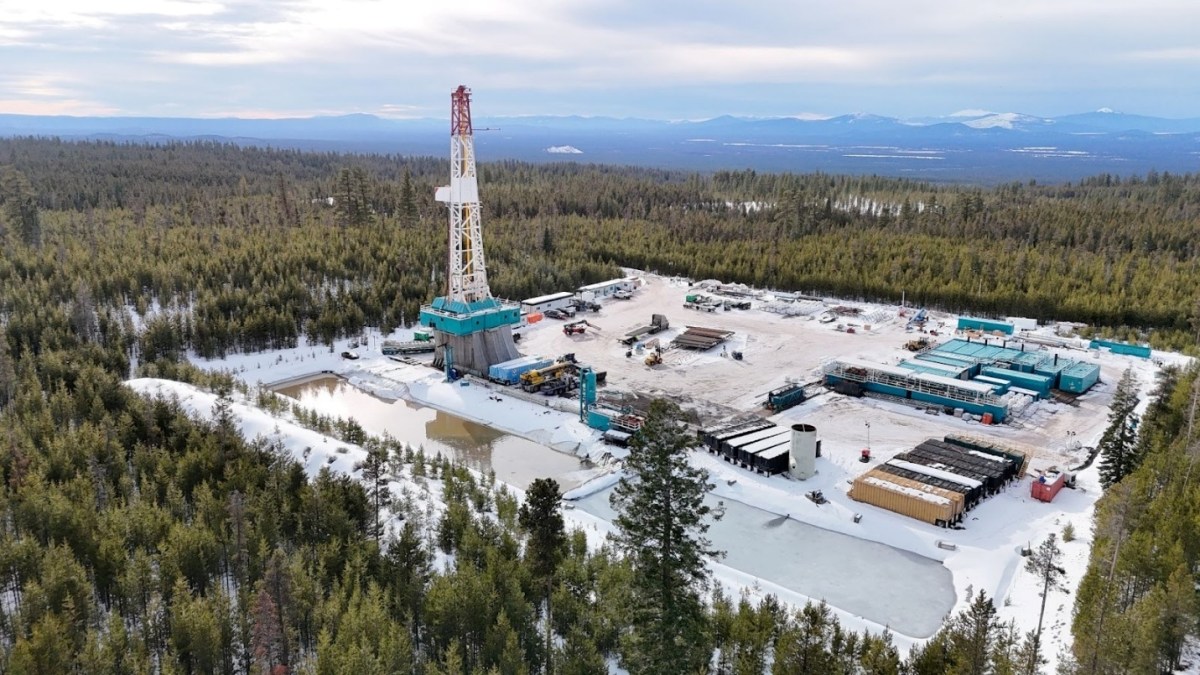
Mazama Energy announced Thursday it has raised $135 million in an oversubscribed Series B funding round. The company is focused on developing super-hot-rock geothermal energy technology.
Table of Contents
Mazama Energy Raises $135 Million Series B
Geothermal startup Mazama Energy has secured $135 million in a Series B funding round, which the company described as oversubscribed. The new capital infusion was led by Centaurus Capital and Doerr Capital.
The round also saw participation from energy companies ConocoPhillips and Shell Ventures. Existing investors, including Khosla Ventures and Gates Frontier, also returned to support the company’s continued growth.
Several new investors joined the round, including SiteGround Capital, H. Barton Asset Management, and the Jeffrey and Marieke Rothschild Foundation. Mazama Energy was originally incubated at Khosla Ventures.
Advancing Super-Hot-Rock Geothermal Technology
The newly raised funds will be used to develop horizontal wells targeting super-hot rocks. These wells are designed to generate up to 15 megawatts of electricity each, significantly more than conventional geothermal wells.
Mazama Energy has demonstrated rapid drilling progress, reaching depths of over 10,000 feet in as few as 15 days. The company’s current drilling targets are around 15,000 feet deep.
At these depths, Mazama can access heat sources of approximately 750˚ F (400˚ C). At high pressures, water at this temperature becomes a “supercritical” fluid, a state that allows it to absorb and transfer significantly more energy than ordinary steam.
Oregon Site Poised for Significant Power Generation
Mazama Energy plans to commence electricity generation at its Oregon site sometime next year. The company now estimates this first site is capable of producing 10 gigawatts of electricity.
This is a substantial increase from its previous estimate. Last year, investor Vinod Khosla stated the site had the potential to produce 5 gigawatts. Mazama aims to complete the development of this first site by 2030.
Upon completion in 2030, the Oregon site is projected to generate 200 megawatts of electricity. The company has also secured land for a second development site.
Global Potential of Super-Hot-Rock Geothermal
The potential global impact of super-hot-rock geothermal energy is substantial. Tapping into just 1% of these resources worldwide could yield more than 63 terawatts of electricity, according to estimates from the University of Twente and the Clean Air Task Force.
This amount of energy far exceeds current global electricity generation. Such a resource could provide a vast source of clean, baseload power if the technology can be successfully scaled.
However, current geothermal technologies have seen limited testing in the extreme conditions found in super-hot rock environments. Scaling electricity production from these resources will require the development and implementation of next-generation geothermal technologies and approaches.
Frequently Asked Questions
What is super-hot-rock geothermal energy?
Super-hot-rock geothermal energy involves accessing subterranean heat sources exceeding 750˚ F (400˚ C). At these temperatures and high pressures, water becomes a supercritical fluid, enabling significantly higher energy transfer compared to traditional steam-based geothermal systems.
How much funding has Mazama Energy raised?
Mazama Energy has raised $135 million in its Series B funding round. This latest investment was led by Centaurus Capital and Doerr Capital, with participation from existing and new investors in the energy sector.
What is the potential power output of a super-hot-rock well?
A single horizontal well in super-hot rock, developed by Mazama Energy, is capable of generating up to 15 megawatts of electricity. This is significantly more than conventional geothermal technologies, which typically produce much lower outputs per well.
What is the global potential for super-hot-rock geothermal?
Estimates suggest that accessing just 1% of global super-hot rock resources could generate over 63 terawatts of electricity. This represents a massive potential for clean energy production, far exceeding current global electricity needs.
