
FCC Clears SpaceX to Deploy Up to 1 Million Starmind Data Center Satellites, With Conditions and Deferred Debris Rulings
Source: docs.fcc.gov
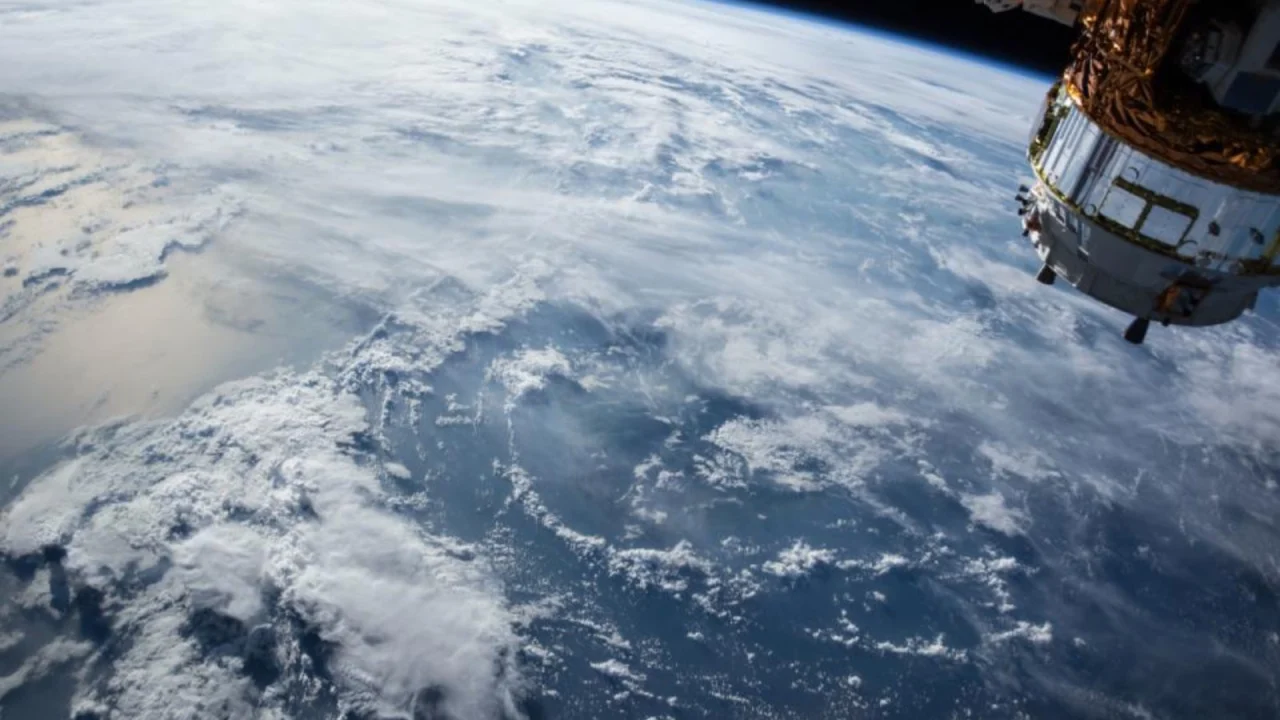
Image: NASA, public domain via Openverse
Tech news by email, once a week
Unsubscribe any time. Privacy policy
The Federal Communications Commission's Space Bureau on November 25 granted SpaceX authority to deploy up to 1 million satellites for an orbital AI data center system called Starmind, with conditions attached and several questions left open. The decision is recorded as order DA 26-1273. Chairman Brendan Carr announced it publicly. It is the first FCC authorization for a constellation built around computing in orbit.
What the order authorizes
SpaceX filed the application on January 30, 2026, and the Space Bureau accepted it for public comment on February 4. The request was for up to 1 million satellites in shells reaching 2,000 km. The FCC granted the satellite count but narrowed the altitude. According to reports on the order, the approved system covers six orbital shells, each about 50 km thick, between 500 km and 1,002 km, at 30-degree and sun-synchronous inclinations.
The order sets a deployment schedule. Reports on its terms say SpaceX must have a first satellite operating by November 25, 2033, and the full constellation in place by November 25, 2040. Coverage also describes a 15-year licence term that starts once SpaceX certifies its first operating satellite. The authorization lapses if the milestones are missed, according to those reports.
The FCC licenses radio spectrum and orbital operations. It does not judge whether computing in space makes technical or commercial sense. Press accounts of the order say the radiofrequency authorization covers backup and emergency telemetry, tracking and command links. The satellites themselves are expected to depend mainly on optical links between satellites, which the FCC's February notice also described, including links to Starlink's first and second generation satellites.
Debris plan accepted only below 600 km
The order accepted SpaceX's debris mitigation plan only for satellites flying below 600 km. Four of the six approved shells sit above that line. Before SpaceX deploys into those higher shells, it must file a modification application with a final debris plan.
The Commission also deferred SpaceX's request to waive the rule that satellites ending their missions below 2,000 km must re-enter the atmosphere. SpaceX had proposed alternatives such as disposal orbits and heliocentric orbits. The FCC wrote that SpaceX had not given it enough information to decide whether those methods comply, and it requires a modification filing before any satellite that will not re-enter is deployed. SpaceX also asked for other rule waivers in its filing. Reports on the order do not give a clear account of how each was handled, so those remain unclear here.
The order rejected the objections of Amazon, Viasat and the American Astronomical Society, all of which had asked the FCC to deny the application. Amazon argued in March that the filing lacked basic orbit and spectrum information and described Starmind as a lofty ambition, not a real plan. Carr criticized that petition at the time, pointing to Amazon's own delay against a deployment milestone for its Kuiper constellation. The FCC also said it is reviewing other orbital data center proposals and will decide them one by one.
Nothing for users to buy yet
The announcement has no price, product tier, customer programme or regional availability. Starmind is not a service that US or UK customers can sign up for. SpaceX has not published rates for orbital compute, has not said whether outside companies could rent capacity, and has not named the chips the satellites would carry. The FCC order says nothing about computing performance, power per satellite or cost.
SpaceX's own timeline is earlier than the regulator's. The company's IPO filing in May said orbital AI compute satellites could begin deploying as early as 2028, according to reports on the document. That filing also described a goal of adding 100 gigawatts of AI compute capacity a year from solar-powered satellites. The FCC deadlines are outer limits, not a forecast. The order does not say when SpaceX has to launch anything before 2033.
How Starmind compares with earlier orbital computing
Orbital computing so far means small tests. Starcloud launched Starcloud-1 on a SpaceX Falcon 9 on November 2, 2025, with an Nvidia H100 on board. The company said it ran Google's Gemma model there and trained a small language model, nanoGPT. Independent reporting on uptime, thermal behaviour and cost is thin, and most of what is public is Starcloud's own account. The company has said its next satellite will be about ten times more powerful. Crusoe plans to host a cloud service on a Starcloud satellite scheduled for late 2026.
Starmind is a different scale of ambition. A million satellites would be roughly 60 times the 15,000 or so active satellites currently in orbit, a figure critics have cited. SpaceX also has hardware to build on. Starship V3 first flew in May 2026, and SpaceX says the V3 Starlink design shares solar array and thermal management technology with the data center satellites. Flight tests of those parts in orbit are still in progress, and reports on the July flight say its Starlink V3 deployment was suborbital.
Rivals are filing and launching on smaller plans
Google is the most visible competitor. Its Project Suncatcher plans solar-powered satellites carrying its own AI chips, linked by free-space lasers. The company has booked Blue Origin's New Glenn to launch the satellites in early 2029, as covered earlier. Blue Origin has separately filed for 51,600 satellites under a plan called Project Sunrise, according to reports. Jeff Bezos has predicted gigawatt-scale data centers in space within 10 to 20 years.
The FCC grant gives SpaceX a licence, not a lead in computing. Rivals that want orbital compute at scale will need their own approvals, and the Commission has said those will be reviewed individually. SpaceX does hold one clear advantage over them. It owns the launch vehicle it would need for a mission of this size, and rivals including Google are booking launches with SpaceX or Blue Origin.
Astronomers and debris specialists are still objecting
Opposition did not end with the order. The European Southern Observatory's Olivier Hainaut estimated that if the constellation were built, the Very Large Telescope in Chile could lose up to 10% of the pixels in each image. Aaron Boley and colleagues published a preprint modelling the night sky with several hundred thousand satellites and no reflectivity mitigation. SpaceX does dim its Starlink satellites, but how well that would work at this scale has not been shown. Environmental and scientific groups have also asked for federal environmental reviews of orbital data centers, which the order does not appear to supply.
Several technical questions remain unanswered. SpaceX has not shown how cooling would work for dense AI hardware in vacuum, how radiation would affect chips over a satellite's life, or how it would repair or replace failed units. It has not said how it would keep collision risk manageable across a million objects, or what the satellites would cost to build. Sceptics outside the company, among them astrophysicist Adam Becker, have called the whole concept fantasy. Short seller Jim Chanos has questioned the 2027 flight timetable Musk has floated, noting that Starship has not yet shown it can reach full orbit.
What readers can do now
For anyone who uses AI services, nothing changes. Models you use through ChatGPT, Claude or Gemini will keep running in ground data centers for years, and no provider has announced orbital capacity. If you run models locally and want to know what your own hardware can handle, our tool for checking which AI model your computer can run is a practical starting point.
Anyone with a view on the project can follow it in the FCC's records. The proceeding is the SpaceX Orbital Data Center system, file number SAT-LOA-20260108-00016 in the Commission's satellite filing system. The modification applications for higher shells and for the disposal waiver are the next filings to look for, and those are where the debris questions will be decided. Amateur astronomers and satellite watchers can expect Starmind's first launches to show up in tracking catalogues, which would give the first independent data on how bright the satellites are.
SpaceX has not said when the first Starmind satellite will launch, what hardware it will carry or what the capacity will cost, and the company did not respond in the material reviewed here to the objections that remain open.
Sources: FCC order DA 26-1273
Featured image: NASA, public domain via Openverse
Get the week's tech news by email
One email a week with Trendblog's stories on AI, hardware, apps and crypto.
We'll email you to confirm your address. Unsubscribe any time. Privacy policy