
GrapheneOS Shows Proof-of-Concept RCS Messaging App That Works Without Google Messages
Source: x.com
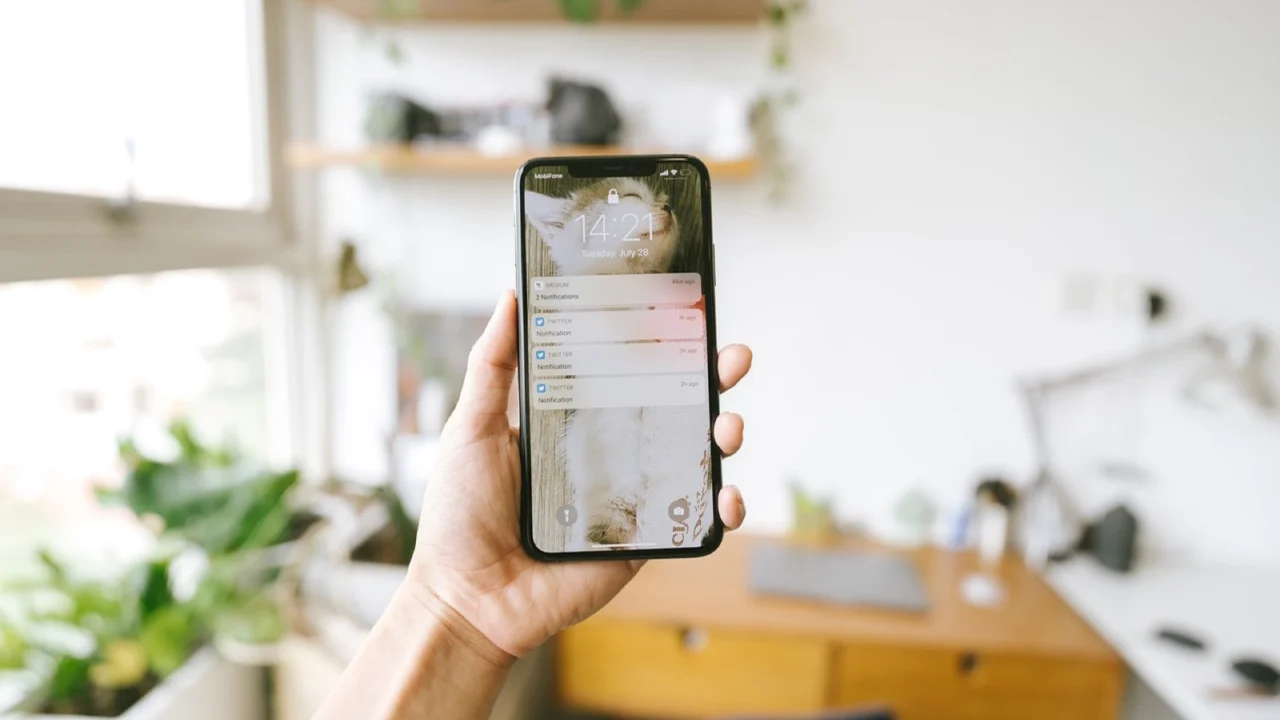
Image: tranmautritam on Pixabay
Tech news by email, once a week
Unsubscribe any time. Privacy policy
GrapheneOS, the security-focused Android distribution, said on 21 November that it has built a proof-of-concept RCS messaging app. The app sends and receives RCS messages without Google Messages. The project said the prototype already has end-to-end encryption using MLS that is compatible with Google Messages and iOS. It also has typing indicators, delivery and read receipts, reactions, and media and file sharing. GrapheneOS said it will use what it learned to add RCS to its own Messaging app. It gave no release date.
What the prototype does and does not do
The announcement describes a test build, not a product. GrapheneOS said the first implementation depends on sandboxed Google Play, the compatibility layer that runs Google's services as an ordinary app without system privileges. The reason is carrier practice. Most carriers hand RCS off to Google's infrastructure and expect a token from Google Play before they activate a phone number. The prototype therefore replaces the messaging app but not the Google service underneath it.
GrapheneOS said it wants to build a fully standalone implementation later. That version would work only on carriers that support it without Google involvement. The project has not named those carriers.
The prototype handles RCS only, according to coverage of the demonstration. A public release would also need SMS and MMS fallback, because an RCS-only app cannot reach contacts who lack RCS or a data connection. GrapheneOS has not said how that fallback will work. It has also not said whether the prototype will ship as a separate app or only as code folded into the Messaging app.
Availability and price
Nothing is downloadable yet, and nothing is for sale. GrapheneOS is free and open source, and it officially supports Pixel phones. Reports earlier this year said the project would also support Motorola hardware, starting with the Motorola Signature 27. GrapheneOS has not said that the RCS work will reach non-Pixel devices. Because the feature needs changes inside the operating system, it is unlikely to appear on stock Android as an installable app.
US and UK users face the same position. No region has a release, and GrapheneOS has published no carrier list. The carrier dependency is the open point in both countries. In the US, T-Mobile is the carrier most often cited as requiring Google's authentication step. UK operators have not announced which of them will support the newer RCS profile that encryption needs.
How GrapheneOS handled RCS until now
GrapheneOS has treated RCS with suspicion for years. Its developers said in 2022 that RCS did not require Play services but that the stock Android Messaging app lacked support for it. They called it a low priority, because RCS is carrier-based messaging with weaker security than a dedicated secure messenger. In 2024 the project also pointed out that only Google and Samsung had working RCS apps and that the standard was less open than it looked.
The practical answer for users was Google Messages running on sandboxed Google Play. That setup was fragile. In September 2025 the project criticised Google and carriers over broken RCS provisioning. A GrapheneOS release in February 2026 added a toggle that gives sandboxed Play services access to ICC authentication. That fixed RCS on T-Mobile and other carriers that require it. The toggle is under the Play services special permissions in the sandboxed Google Play settings. Users on other carriers reported that RCS still dropped after updates or cache resets.
The project's own Messaging app is also in transition. GrapheneOS has been rebuilding the old AOSP Messaging app with a new interface written in Android Compose. It said parts of that interface, including widgets, still need work. In September it described RCS as a later goal, after the rewrite is done. The new prototype shows the RCS work has started in parallel.
Where the encryption comes from
The interoperability claim rests on work by Apple and Google. In May 2026 both companies began rolling out end-to-end encrypted RCS between iPhone and Android. Apple's beta in iOS 26.5 shows a lock icon in encrypted chats. The system uses the GSMA's RCS Universal Profile 3.0, which applies the IETF's MLS protocol. Encryption needs carrier support for that profile, and one unsupported carrier in a conversation can leave the whole thread unencrypted. GrapheneOS's statement that its prototype interoperates with Google Messages and iOS means it implements the same standard. Independent testing of that claim has not been published.
How it compares with Google Messages and secure messengers
Google Messages remains the complete option. It handles RCS, SMS and MMS, runs on most Android phones, and is free. Its drawback for GrapheneOS users is that it needs Google's services, including the sandboxed copy, and has been the only practical RCS client on the platform. A working GrapheneOS client would remove that single point of dependence on the app. It would not remove the dependence on Google's carrier-facing infrastructure while the first version still needs Play.
Secure messengers sit in a different category. Signal and Molly, a hardened Signal fork for Android, are free, and neither supports SMS. Their encryption does not depend on carrier upgrades, and they work between any two users who have installed them. RCS only reaches people whose carrier, phone and app all support the same version of the profile. GrapheneOS made that argument itself in earlier posts, and its latest announcement says the prototype is not meant to replace a dedicated secure messenger. RCS's value is reaching the large number of contacts who will never install a second app.
Encryption also protects content only. Delivery still runs through carrier or Google servers, so the fact that two numbers are messaging each other stays visible to them.
Open questions
- Release timing: GrapheneOS gave no schedule, and the Messaging app rewrite is still unfinished.
- Carrier coverage: The project has not said which carriers will work with the standalone version. It has also not said how many will work with the Play-assisted version.
- Provisioning: A GrapheneOS contributor reported in October that Google's Jibe provisioning relies on DroidGuard, an internal Play services API that third-party apps cannot call. The public discussion lists workarounds, but they are unverified ideas. The announcement does not say how the prototype gets around this.
- Fallback: SMS and MMS support has not been demonstrated.
- Policy: Google has not commented on third-party RCS clients, and carrier agreements could limit which clients get activated.
- Testing: No independent hands-on report has been published. Security researchers have not audited the code or the MLS implementation.
What GrapheneOS users can do now
Nothing needs to change today. Users who want RCS should keep using Google Messages with sandboxed Google Play and the ICC authentication toggle if their carrier requires it. Check that setting before assuming a carrier problem. In the US, T-Mobile customers are the group most affected. Anyone who wants encryption that does not depend on a carrier should use Signal or Molly for those contacts. The RCS client is best treated as a convenience for people who cannot move their contacts to another app.
Before relying on any RCS encryption, look at the lock icon in each thread. It shows whether that particular conversation is encrypted. On an iPhone, the setting is under Settings, Apps, Messages, RCS Messaging. If the toggle is missing, the carrier has not enabled support.
Readers on other Android phones are unaffected for now. Rivals such as Samsung Messages and Google Messages still own the RCS experience on those devices, and GrapheneOS has announced no plan to ship a version for them.
Effect on the wider RCS market
RCS clients on Android have been limited to Google's app and Samsung's, as the GrapheneOS team noted in 2024. A third client that uses the same encryption standard would be the first sign that the standard can be implemented outside those two companies. Whether carriers will activate numbers for it is a separate question, and the answer decides how useful the work becomes. The first Play-assisted version carries the same limits as Google Messages on that point.
Featured image: tranmautritam on Pixabay
Get the week's tech news by email
One email a week with Trendblog's stories on AI, hardware, apps and crypto.
We'll email you to confirm your address. Unsubscribe any time. Privacy policy