

DJI Osmo 360 II Review: 8K/60fps Video & Replaceable Lenses for £509

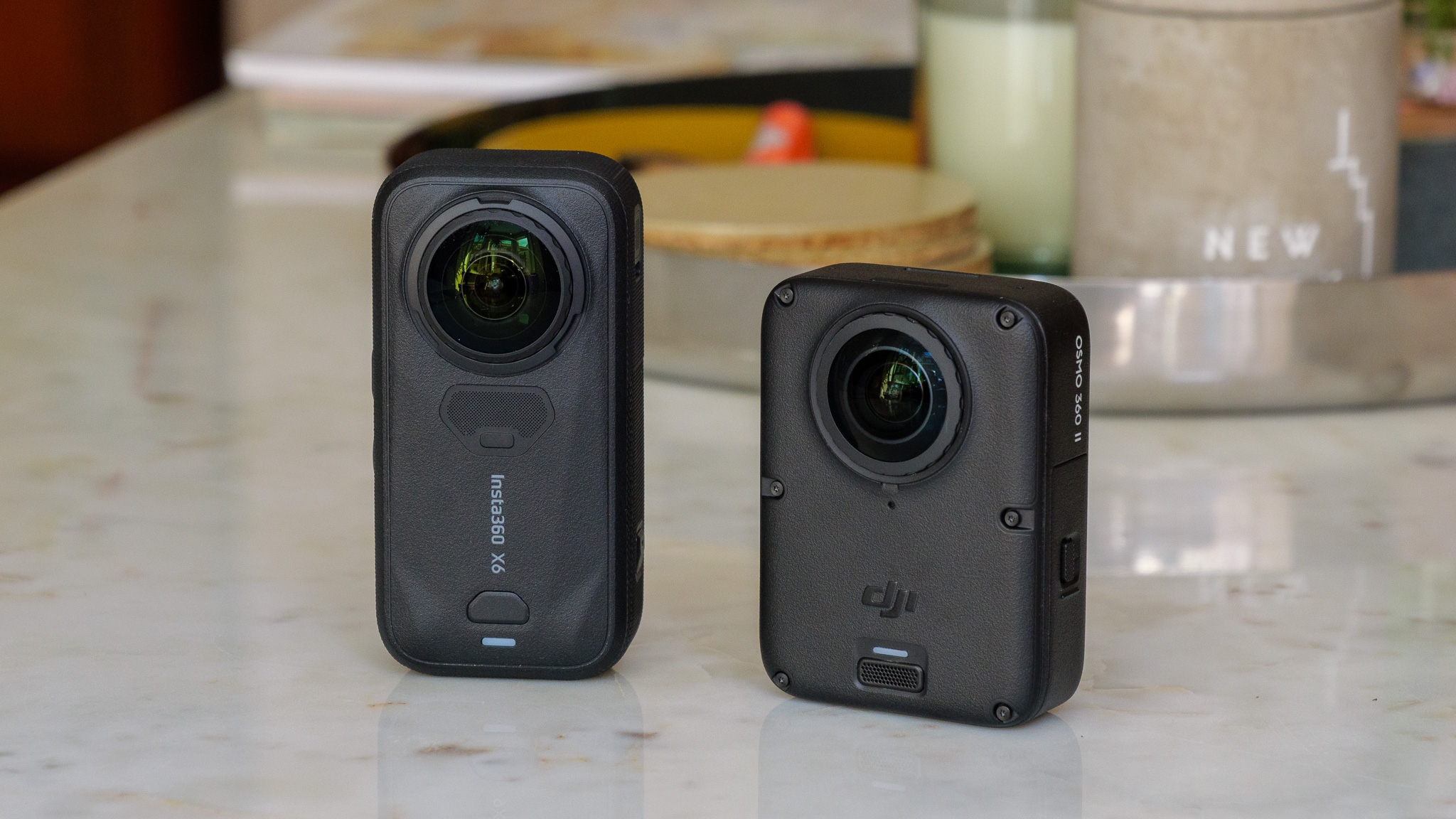
The DJI Osmo 360 II is a well-rounded 360 camera for creators who want improved durability and imaging capabilities over its predecessor, all while maintaining a price point below key competitors like the Insta360 X6.
Table of Contents
Key Facts
- 8K video at 60fps is a first for 360 cameras.
- Lenses are now user-replaceable.
- Waterproof rating remains at 10m.
- 105GB of internal storage is included, plus a microSD slot.
- Battery capacity increased slightly to 2150mAh.
- Offers 24-bit audio when paired with DJI Mic.
- Standard Combo price is £509 / AU$921.
DJI Osmo 360 II: Design and Improvements
The DJI Osmo 360 II represents a swift evolution from its first-generation counterpart, demonstrating DJI’s ability to refine a promising product into a more capable device in just one year. Key improvements include user-replaceable lenses, enhanced underwater shooting capabilities, and overall better image quality.
DJI has also managed to keep the Osmo 360 II’s price point significantly lower than that of the competing Insta360 X6. This approach of addressing predecessor flaws while retaining affordability makes the Osmo 360 II a compelling option for users seeking a robust 360 camera experience.
Physical dimensions and weight are largely unchanged from the original Osmo 360, maintaining a familiar feel. The screen, connectivity, and mounting hardware also carry over, ensuring compatibility for existing users.
DJI Osmo 360 II: Image and Video Capabilities
The Osmo 360 II delivers strong performance in image and video capture, positioning it as a serious competitor to models like the GoPro Max 2 and Insta360 X6, especially in low-light conditions.
Its standout feature is native 8K video recording at 60 frames per second, a first for any 360 camera and an improvement over the Insta360 X6’s 8K/50fps limit.
Beyond 8K video, the camera sees enhancements in dynamic range, slow-motion capabilities, timelapse resolution, and SuperNight low-light performance. While the core sensor may be similar to the previous model, these improvements suggest significant gains through advanced processing. The Osmo 360 II also supports HDR for its 120MP photo mode, offering greater detail.
Editing options include DJI Studio, which offers up to 64x slow-motion through frame interpolation. This allows for detailed post-production adjustments to captured footage, providing creators with more creative control over their 360 content.
DJI Osmo 360 II: Underwater Shooting and Durability
DJI’s approach to underwater shooting has seen a significant shift with the Osmo 360 II. While the camera’s case-free waterproof rating remains at 10 meters, DJI now actively promotes it as a viable option for snorkelers and scuba divers, a contrast to its previous stance with the original model.
This increased confidence in its underwater performance makes the Osmo 360 II a more versatile tool for capturing activities both above and below the water’s surface. However, it is important to note that this 10m rating is half of the 20m offered by the Insta360 X6.
The lenses have also been upgraded with a tougher optical coating, and crucially, they are now user-replaceable. This addresses a major concern for action sports enthusiasts and anyone who risks lens damage, offering greater peace of mind for demanding use cases.
DJI Osmo 360 II: Performance and Battery Life
Overall performance of the DJI Osmo 360 II is described as solid, with battery life comparable to its predecessor. The internal storage capacity remains a generous 105GB, and DJI’s Mimo and Studio applications are reliable for editing and management.
DJI has increased the battery capacity from 1950mAh to 2150mAh, though real-world usage indicates battery life is largely the same.
DJI claims up to 100 minutes of continuous 8K/30fps recording on a full charge. Testing confirmed this, with 25 minutes of 8K/30fps footage consuming approximately 25% of the battery.
When pushed to its limits with 8K/60fps recording, the camera may experience overheating, especially in warmer conditions or without airflow. One test showed the camera shutting down after around 19 minutes under such circumstances.
The batteries are interchangeable with both previous Osmo 360 generations and recent Osmo Action-series cameras, a benefit for users already invested in DJI’s ecosystem. This allows for cross-device battery usage, potentially extending shooting times for those with multiple DJI products.
DJI Osmo 360 II: Storage and Software
The DJI Osmo 360 II retains the substantial 105GB of internal storage found in its predecessor, providing ample space for high-resolution footage. For users requiring additional capacity, a microSD card slot is also available, offering flexibility for extended recording sessions.
Audio capture is handled by four built-in microphones, which provide usable sound. Furthermore, the camera supports 24-bit audio wirelessly when connected to a DJI Mic, leveraging DJI’s OsmoAudio ecosystem for professional sound recording. This integration can be a significant advantage for content creators prioritizing audio quality.
Content editing and reframing are managed through two companion applications: the mobile DJI Mimo app and the desktop-based DJI Studio. While both apps are generally dependable, the AI-assisted auto-editing tools in Mimo were found to be unimpressive. However, for manual editing, reframing, and tweaking clips, both applications perform their tasks without issue.
DJI Osmo 360 II: Price and Value Proposition
The DJI Osmo 360 II represents a significant upgrade over its predecessor, evident in its price increase. The Standard Combo is priced at £509 / AU$921, a notable jump from the original Osmo 360’s launch price.
However, this increase still positions the Osmo 360 II as considerably more affordable than its main rival, the Insta360 X6, which starts at £619.99 / AU$1,049.99.
While the Osmo 360 II is not the cheapest option in the 360 camera market, the GoPro Max 2, available for £269.99 / AU$849.95, offers a more budget-friendly alternative if cost is the primary concern.
The Osmo 360 II’s value proposition lies in its comprehensive feature set and improved capabilities at a price point below high-end competitors.
For users requiring additional accessories, the Adventure Combo is available for £639 / AU$1,096. This package includes two extra batteries, a charging case, and a 1.2m selfie stick, which can offer considerable savings compared to purchasing these items separately, particularly for those planning extended shooting sessions.
Frequently Asked Questions
What are the main improvements in the DJI Osmo 360 II?
The DJI Osmo 360 II features user-replaceable lenses, improved underwater shooting capabilities, and enhanced image quality compared to its predecessor. It also offers native 8K video at 60fps, a first for 360 cameras.
Is the DJI Osmo 360 II waterproof?
The DJI Osmo 360 II has a case-free waterproof rating of 10 meters, making it suitable for snorkeling and scuba diving within that depth limit. This is half the rating of the Insta360 X6.
What is the battery life of the DJI Osmo 360 II?
Battery life is similar to the original model, with a claimed 100 minutes of 8K/30fps recording. Pushing to 8K/60fps may result in shorter recording times due to potential overheating, with one test showing around 19 minutes.
What are the storage options for the DJI Osmo 360 II?
The camera comes with 105GB of internal storage, and also includes a microSD card slot for expanded storage needs.
Worth it if: You want a robust 360 camera with user-replaceable lenses, better low-light performance, and native 8K/60fps video, all at a price below the Insta360 X6.
Skip if: Your priority is the absolute lowest price for a 360 camera, or if you require a higher waterproof rating than 10 meters.
