


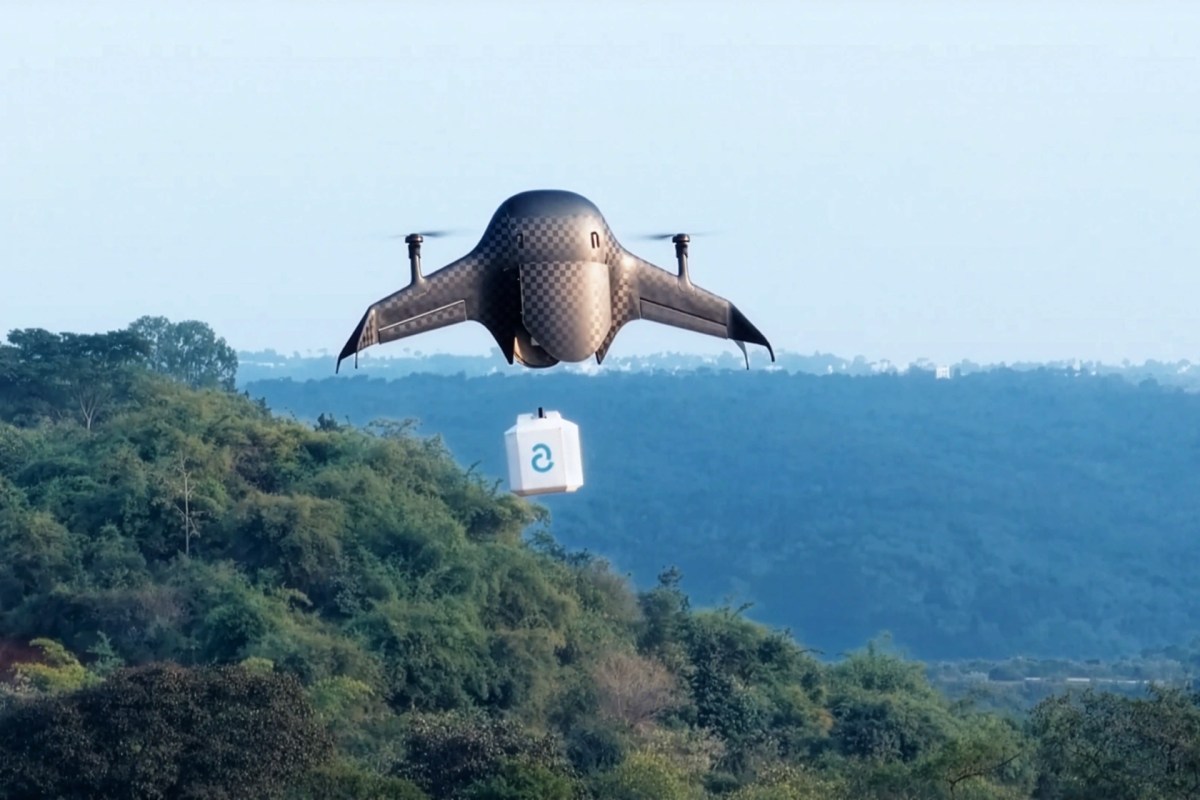
Airbound, an Indian startup developing autonomous drones, has secured $37 million in Series A funding. The investment, which aims to make aerial goods transport cost-competitive with trucking, was led by Greenoaks with participation from DoorDash, Lachy Groom, Lightspeed, and Humba Ventures.
Table of Contents
Airbound Raises $37 Million Series A
Airbound, an Indian startup focused on autonomous drone technology, has announced a $37 million Series A funding round. This capital infusion aims to support the company’s mission of achieving cost parity between aerial and road freight transport. The round was led by Greenoaks and included investments from DoorDash, Lachy Groom, Lightspeed, and Humba Ventures.
This new funding follows Airbound’s $8.65 million seed round, which occurred less than a year ago. With this latest investment, the three-year-old company has now raised nearly $50 million. Airbound believes drones can offer faster and more economical solutions for transporting certain goods compared to traditional road vehicles.
Airbound’s Drone Technology and Development
Airbound is developing vertical-flight drones designed to be lighter than the cargo they carry, according to founder and CEO Naman Pushp. This design approach aims to reduce the energy expenditure associated with lifting the aircraft’s own weight, thereby lowering operational costs.
The startup’s current drone model, the TRT, weighs approximately 3.3 pounds and can carry a payload of about 2.2 pounds. An updated version is under development, which is expected to weigh around 6.6 pounds and have the capacity to carry up to 11 pounds of cargo.
Airbound utilizes a tail-sitter design, allowing for vertical takeoff and landing, a feature the company intends to maintain for future, larger aircraft to eliminate the need for runways.
Airbound’s Current Operations and Partnerships
Since its founding in 2023, Airbound has conducted over 13,000 autonomous flights across the southern Indian cities of Bengaluru and Guntur. A significant portion of these flights, more than 1,000, have been in partnership with the Narayana Health hospital network, transporting diagnostic samples between its facilities.
Currently, a single drone is used for the Narayana Health route, completing sample deliveries of approximately 2.5 miles in about seven minutes.
This contrasts with road transport, which can take three to five hours when accounting for wait times to consolidate sufficient samples. The partnership is expanding to include Narayana’s new Banashankari hospital, which will rely on Airbound’s drone service for its diagnostic needs.
Airbound’s Future Ambitions and Challenges
Airbound aims to establish a drone delivery network connecting three cities within the state of Andhra Pradesh. The company has entered into an agreement with the state government, setting an ambitious target of 10,000 daily flights for retail, e-commerce, and healthcare deliveries.
Achieving this daily flight goal is projected to require between 250 and 1,000 aircraft, contingent on route lengths. Pushp anticipates the fleet size will likely be closer to 250.
The agreement does not include government subsidies, but the state government is collaborating with Airbound on the necessary regulatory framework. The primary obstacle for scaling operations remains securing approvals for beyond visual line of sight (BVLOS) flights, which are critical for large-scale delivery networks.
Competitive Landscape in Indian Drone Delivery
Several Indian startups, including Skye Air Mobility and TSAW Drones, are actively developing aerial logistics businesses. Garuda Aerospace is another Indian drone manufacturer that has explored delivery applications.
However, Pushp differentiates Airbound’s strategy by focusing on building the aircraft that other logistics networks can utilize, rather than solely aiming to become a large-scale delivery operator. He likens this approach to Boeing’s role in providing aircraft for airlines worldwide, emphasizing the development of foundational technology.
Frequently Asked Questions
What is the total amount Airbound has raised?
Airbound has raised nearly $50 million in total funding. This includes the recent $37 million Series A round and a previous $8.65 million seed round.
How much do Airbound’s drones weigh?
The current TRT drone weighs about 3.3 pounds and can carry a 2.2 pound payload. The next version will weigh approximately 6.6 pounds and carry up to 11 pounds.
How many flights has Airbound completed?
Airbound has completed over 13,000 autonomous flights. This includes more than 1,000 flights for Narayana Health, transporting diagnostic samples.
What are Airbound’s main challenges?
The primary challenge for Airbound is regulatory hurdles, specifically obtaining approvals for beyond visual line of sight (BVLOS) operations. The company is also pre-revenue despite having over 150 employees.
