

ASUS Zenbook A16 vs MacBook Air 15: Zenbook A16 is $100 cheaper

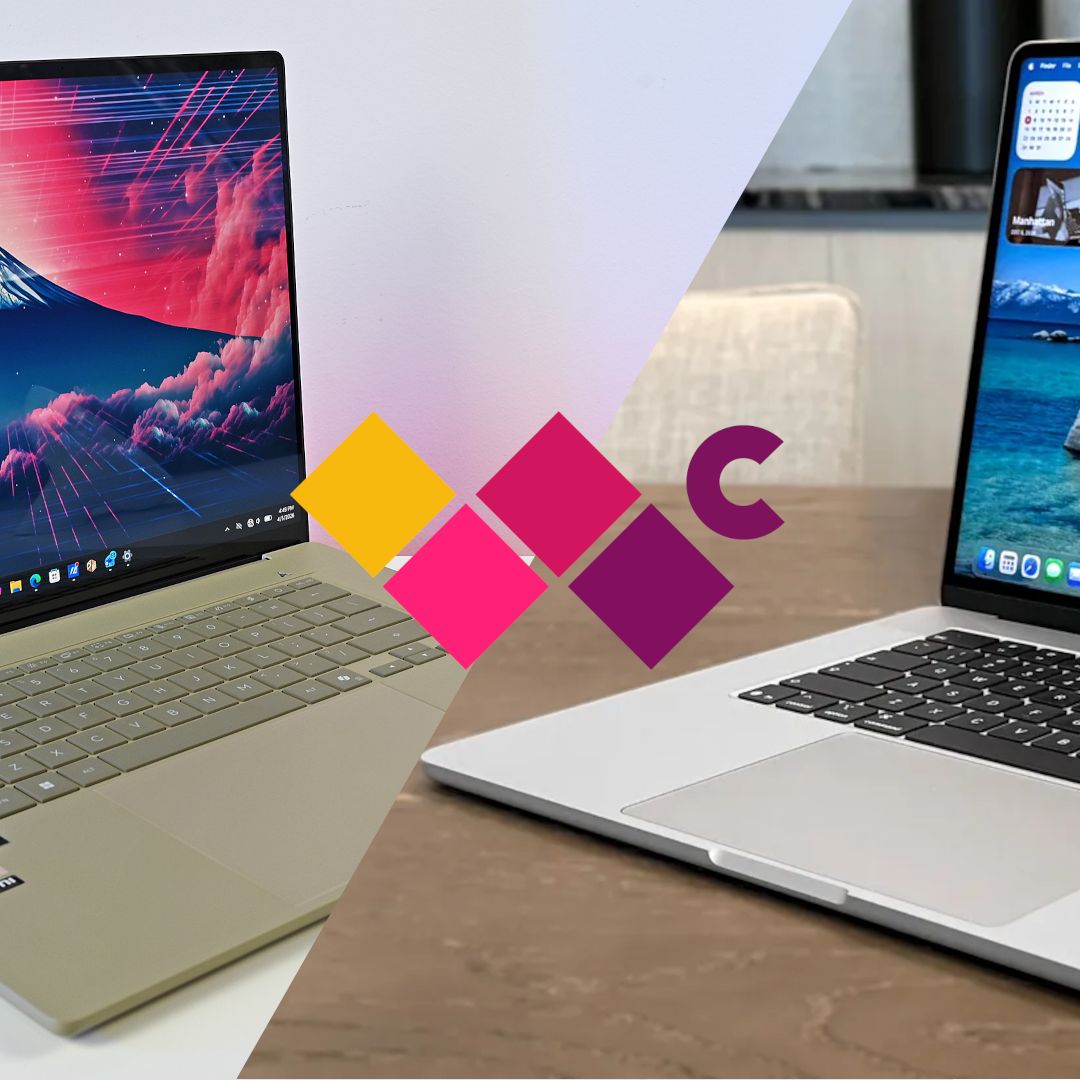
The ASUS Zenbook A16 is the superior choice for users prioritizing a premium Windows experience with a stunning display and extensive connectivity, while the Apple MacBook Air 15 remains a strong contender for macOS loyalists who value its established ecosystem and efficient single-core performance.
Table of Contents
Design and Portability: ASUS Zenbook A16 vs. MacBook Air 15
Despite its larger 16-inch display, a more substantial battery, and slightly increased overall dimensions, the ASUS Zenbook A16 surprisingly weighs less than the 15-inch MacBook Air. The ASUS laptop comes in at 2.65 pounds (1.2kg), significantly lighter than the MacBook Air 15’s 3.3 pounds (1.51kg).
Furthermore, the Zenbook A16’s physical footprint is not dramatically larger than the MacBook Air 15’s. The primary difference in their physical profiles lies in their thickness, with the MacBook Air maintaining an edge at 0.45 inches (1.15cm) compared to the Zenbook A16’s 0.54-0.65 inches (1.38-1.65cm).
ASUS utilizes a “Ceraluminum” material for its chassis, a lightweight yet durable magnesium alloy. The MacBook Air also features a rigid and refined aluminum construction. This design choice contributes to the Zenbook A16’s impressive weight advantage despite its larger screen size.
Display: Zenbook A16’s OLED Brilliance vs. MacBook Air’s Retina
The ASUS Zenbook A16 boasts a 16-inch OLED display featuring a sharp 2880×1800 resolution and a fluid 120Hz refresh rate, with optional touch functionality. This screen offers a base brightness of 500 nits, which can surge to 1,100 nits for HDR content.
This display is certified for VESA DisplayHDR True Black 1000, making it an exceptional choice for creative professionals and media consumption. The ASUS Zenbook A16’s display specifications are: “, OLED, 2880×1800, 120Hz, 500 nits (1,100 nits HDR), 100% DCI-P3, VESA DisplayHDR True Black 1000, touch or non-touch 15.3″”.
In contrast, the MacBook Air features a 15.3-inch IPS display with a slightly higher resolution of 2880×1864. However, it is limited to a 60Hz refresh rate and lacks touch capabilities. Its brightness often falls short of the advertised 500 nits for both SDR and HDR content.
Features and Connectivity: Zenbook A16’s Port Advantage
The ASUS Zenbook A16 offers a significantly better selection of ports compared to the MacBook Air 15. The Zenbook A16 includes dual USB4 ports, a USB-A 3.2 (Gen 2) port, native HDMI 2.1 output, an SD 4.0 card reader, and a 3.5mm audio jack.
Conversely, the MacBook Air 15 is equipped with only two Thunderbolt 4/USB4 ports and a 3.5mm audio jack. This port limitation means the MacBook Air 15 can support a maximum of two external displays, each capped at 4K resolution and 144Hz refresh rate.
With its native HDMI port and dual USB4, the Zenbook A16 provides superior external display support. Additionally, both laptops feature 1080p webcams, but the Zenbook A16’s camera includes an IR sensor for Windows Hello facial recognition, a feature absent on the MacBook Air, which relies on fingerprint Touch ID.
| Feature | ASUS Zenbook A16 | MacBook Air 15 |
|---|---|---|
| Display Size | 16-inch OLED | 15.3-inch IPS |
| Resolution | 2880×1800 | 2880×1864 |
| Refresh Rate | 120Hz | 60Hz |
| Max Brightness (HDR) | 1,100 nits | 500 nits |
| Touchscreen | Optional | No |
| Weight | 2.65 pounds | 3.3 pounds |
| USB Ports | 2x USB4, 1x USB-A 3.2 (Gen 2) | 2x Thunderbolt 4 / USB4 |
| Video Output | 1x HDMI 2.1 | Via USB4/Thunderbolt |
| Card Reader | SD 4.0 | No |
| Webcam | 1080p with IR sensor | 1080p |
Performance and Value Proposition
The ASUS Zenbook A16 is a nearly flawless Windows laptop that significantly challenges Apple’s dominance in the lightweight category. Its array of features and performance may even entice macOS users to switch to Windows 11.
Apple’s MacBook Air 15 continues to offer robust single-core performance and excellent power efficiency due to its M5 chip. However, many of its features do not compete with those found in the Zenbook A16, and users often pay more for comparable configurations.
The Zenbook A16 with the Snapdragon X2 Elite Extreme (X2E-94) chip, 48GB of RAM, and a 1TB SSD is priced at $1,599.99. The MacBook Air 15 M5 starts at $1,299 with 16GB of RAM and a 512GB SSD.
Upgrading the MacBook Air to 24GB of RAM and a 1TB SSD brings its price to $1,699, making the ASUS laptop $100 less expensive.
Frequently Asked Questions
Is the ASUS Zenbook A16 lighter than the MacBook Air 15?
Yes, the ASUS Zenbook A16 weighs 2.65 pounds, while the MacBook Air 15 weighs 3.3 pounds. This makes the Zenbook A16 lighter despite having a larger display.
Which laptop has a better display?
The ASUS Zenbook A16 features a superior 16-inch OLED display with a 120Hz refresh rate, 1,100 nits HDR brightness, and optional touch functionality. The MacBook Air 15 has a 15.3-inch IPS display limited to 60Hz and 500 nits brightness without touch options.
Which laptop offers more ports?
The ASUS Zenbook A16 provides a more extensive port selection, including dual USB4, USB-A 3.2 (Gen 2), HDMI 2.1, and an SD 4.0 card reader. The MacBook Air 15 only has two Thunderbolt 4/USB4 ports and a 3.5mm audio jack.
How does their performance compare?
The MacBook Air 15’s M5 chip leads in single-core performance, scoring 4,191 in Geekbench 6. However, the Zenbook A16’s Snapdragon X2 Elite Extreme chip excels in multi-core performance with a score of 22,872, compared to the MacBook Air’s 17,276.
Buy the ASUS Zenbook A16 if: you prioritize a stunning OLED display with a high refresh rate, a more comprehensive port selection including HDMI and an SD card reader, and superior multi-core performance in a lighter package. It offers a better value proposition for comparable or higher specifications.
Buy the Apple MacBook Air 15 if: you are deeply invested in the macOS ecosystem, prefer Apple’s user interface and trackpad technology, and value its leading single-core performance and established ecosystem integration. Its thinner profile is also a consideration for some users.
