


You can use Microsoft Word to create documents, and it requires no specific version to begin. The software has a long history that predates Microsoft’s more modern operating systems.
Microsoft Word is a powerful word processing application. It is widely used for creating, editing, and formatting text documents.
Table of Contents
Microsoft Word’s Origins on Xenix
Microsoft Word’s development journey began on Xenix, a version of the Unix operating system that Microsoft itself adapted. This was long before Windows was even announced, indicating that Word’s roots are quite distinct from the operating system it is most commonly associated with today.
Xenix was a significant product for Microsoft in the early 1980s. They announced it in August 1980 for 16-bit processors. By 1982, Microsoft was using Xenix on its internal networks and worked with the Santa Cruz Operation to support it across various hardware.
The earliest version of Word emerged from this Xenix environment. Charles Simonyi, who joined Microsoft in 1981 after working at Xerox PARC, was instrumental in this development. He had previously worked on Bravo, an early WYSIWYG text editor.
Simonyi later recruited Richard Brodie, also from Xerox. Brodie began working on Microsoft’s new word processor in 1982. This Xenix origin story highlights Microsoft’s earlier strategy of developing software for promising platforms beyond just their own operating systems.
The Xerox PARC Influence on Early Word
Charles Simonyi’s tenure at Xerox PARC, a renowned research center, deeply influenced the early design of Microsoft Word. While at PARC, Simonyi contributed to Bravo, a pioneering WYSIWYG (What You See Is What You Get) text editor developed for the Xerox Alto computer.
Bravo demonstrated how text could appear on screen in a format closely resembling the final printed output. This concept was foundational for the WYSIWYG editing style that is now standard. Simonyi brought this advanced understanding of graphical interfaces and intuitive editing to Microsoft.
Upon joining Microsoft in 1981, Simonyi brought former Xerox colleague Richard Brodie with him. Brodie began developing the new word processor in 1982. Their shared experience at Xerox PARC was crucial in shaping Word’s unique approach for its time.
This Xerox connection helps explain why early versions of Word incorporated features that felt unusual on the PC landscape of the early 1980s. Simonyi’s exposure to pioneering graphical computing at PARC allowed him to translate these advanced ideas into Word’s design.
Word’s Debut and Early Challenges on MS-DOS
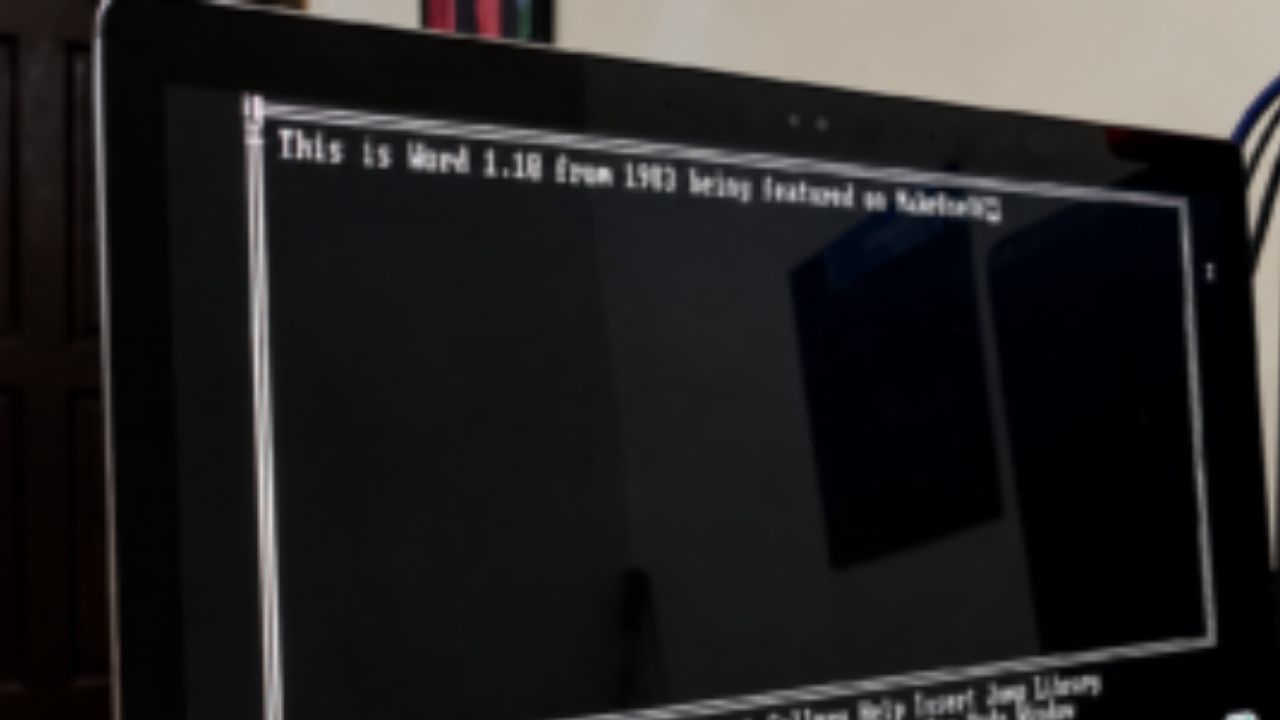
Microsoft Word first appeared under the corporate name Multi-Tool Word, a title characteristic of the 1980s. Development for Xenix began in February 1983, with a version for MS-DOS following later that same year. MS-DOS was Microsoft’s primary disk operating system before Windows.
Microsoft launched the MS-DOS version aggressively. Their corporate timeline indicates that Word for MS-DOS 1.00 shipped on September 29, 1983. A promotional effort included sending approximately 450,000 demo disks to subscribers of PC World magazine.
There are slight variations in the recorded release dates, with some sources citing October 25 as the release for Word 1.0. However, it is clear that Word was available in 1983, preceding Microsoft’s announcement of Windows 1.0 in November of that year.
Despite its advanced features for the time, including mouse support and style sheets, early Word for DOS faced stiff competition. It was considered an “also-ran” compared to dominant products like WordPerfect. This was a far cry from the market leadership Word would later achieve.
Word’s Evolution to Graphical Platforms Before Windows
By 1983, Microsoft Word was already a market presence, preceding the announcement of Windows 1.0 in November of that year. Windows 1.0 itself did not ship until November 20, 1985, more than two years after Word’s initial DOS release.
During this period, Word began its transition to graphical interfaces. Microsoft announced its Macintosh software, including Word, in January 1984, coinciding with the launch of Apple’s new Mac computer. The Mac version became commercially available the following year.
The Macintosh platform was a natural fit for the graphical editing concepts pioneered by Charles Simonyi’s team. Microsoft’s application group already possessed a strong understanding of graphical interfaces, positioning them well for developing on the Mac.
This early move to the Mac demonstrated Microsoft’s willingness to develop for Apple’s platform, a strategy that continued for many years. Word’s journey through Xenix, DOS, and the Mac showcased its adaptability before Windows became its primary platform.
Word’s Arrival on Windows and Subsequent Dominance
Microsoft Word did not appear on the Windows platform until 1989, a full six years after its initial release on DOS. This timing proved advantageous, especially with the subsequent release of Windows 3.0 in 1990.
Windows 3.0 was a significant step forward for the operating system, providing a much more robust graphical environment. This enhanced platform allowed Word to fully showcase the advanced interface and features Microsoft had been developing for years.
The combination of Word and Windows began to gain significant traction in the market. By 1993, according to the Computer History Museum, Word for Windows was generating approximately half of the total revenue in the word-processing market.
This marked a remarkable turnaround for a product whose early DOS ancestor had struggled to compete with established players like WordPerfect. The association between Word and Windows, which is now considered standard, was firmly established during this period.
Word’s journey from its Xenix origins to its dominance on Windows illustrates a different era of Microsoft’s business. The company was more experimental, developing software across various platforms before Windows became its central focus.
Frequently Asked Questions
When was the first version of Microsoft Word developed?
The earliest version of Microsoft Word was developed for Xenix, Microsoft’s version of Unix, in February 1983. A version for MS-DOS followed later the same year.
Did Microsoft Word come out before Windows?
Yes, Microsoft Word was available on MS-DOS in 1983, while Windows 1.0 was not announced until November 1983 and shipped in 1985. Word also appeared on the Macintosh in 1985, before Windows 1.0 was released.
What influenced the early design of Microsoft Word?
Early Microsoft Word was influenced by work done at Xerox PARC, particularly by Charles Simonyi and Richard Brodie. They worked on early WYSIWYG text editors like Bravo for the Xerox Alto.
How did early Microsoft Word perform against competitors?
In its early days on MS-DOS, Microsoft Word struggled against competitors like WordPerfect. It was considered an “also-ran” at the time, a contrast to its later market dominance.
When did Microsoft Word become dominant on Windows?
Microsoft Word began its rise to dominance on Windows after its release in 1989 and the subsequent improvements in Windows 3.0 in 1990. By 1993, it was generating about half of the word-processing market’s revenue.
