

Sony Bravia 7 II Review: RGB Mini-LED TV Now $1,799 is Worth It

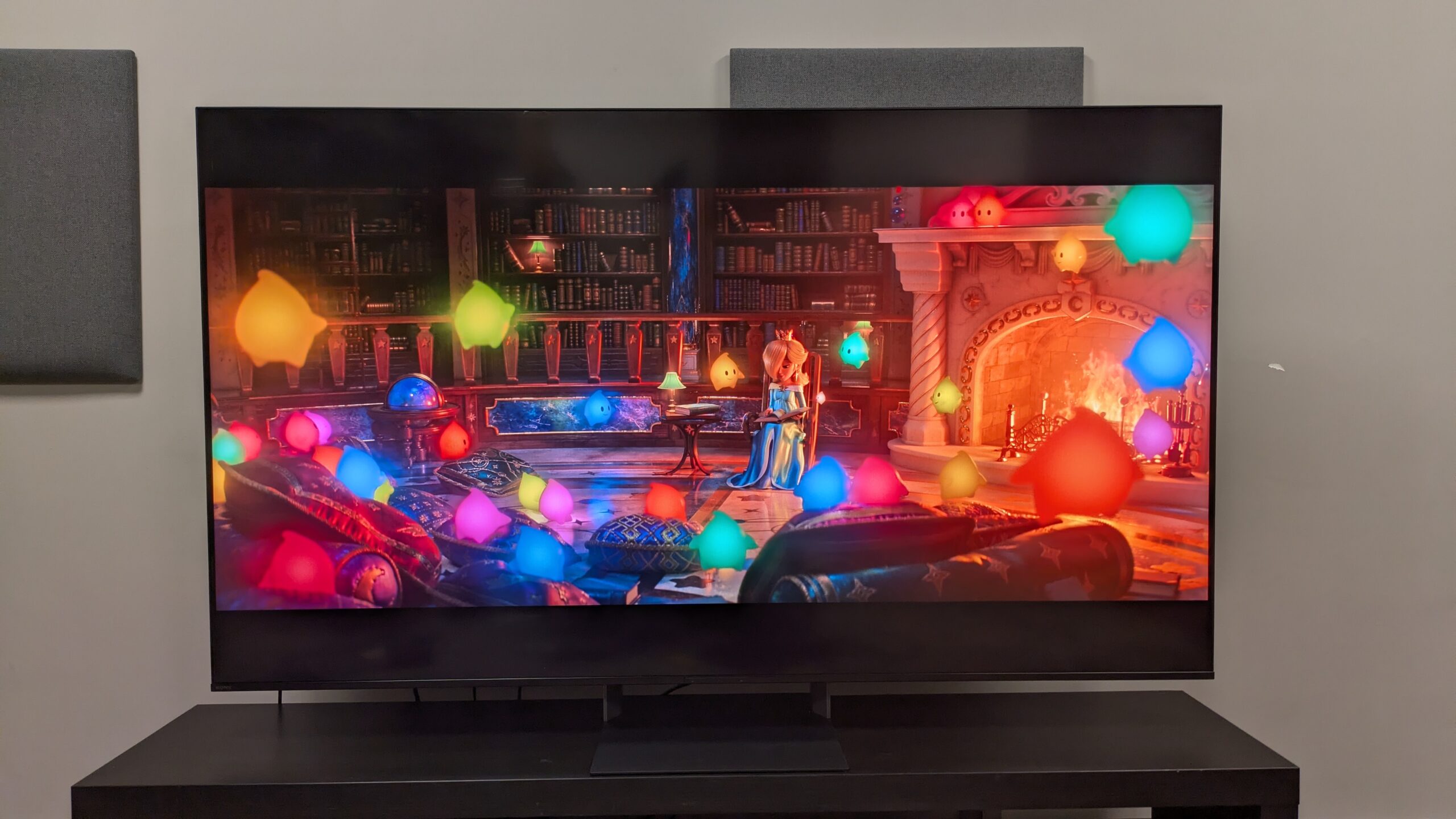
The Sony Bravia 7 II is a great choice for those seeking advanced RGB mini-LED technology in a television that delivers spectacular color and refined detail, making it a strong competitor to OLED displays, though its reflective screen and off-angle viewing limitations are present.
This review covers the Sony Bravia 7 II, a television that employs new RGB mini-LED technology to achieve vibrant colors and detailed images, aiming to rival OLED performance. While it excels in picture quality and gaming, its audio capabilities and screen reflectivity present areas for consideration.
Here’s a breakdown of its key features and performance:
- Picture Quality: Excellent colors and detail, rivaling OLEDs, though affected by screen reflectivity and off-angle contrast fade.
- Gaming Performance: Supports 4K 120Hz, VRR, ALLM, and Dolby Vision, with a low input lag of 10.4ms.
- Sound and Smart Features: Decent built-in sound and a robust Google TV platform with extensive settings.
- Value and Pricing: Launched at $2,599 for the 65-inch model, with prices dropping to $1,799, offering solid value for its technology.
- Technology: Features an RGB mini-LED backlight for enhanced color volume and brightness, along with specific RGB enhancements.
Table of Contents
Sony Bravia 7 II Picture Quality
The Sony Bravia 7 II delivers a great overall picture quality, with spectacular colors that compete directly with top-tier OLED TVs. Its ability to render refined, realistic detail and textures brings on-screen content to life with remarkable clarity. The television also exhibits excellent motion handling, crucial for fast-paced action sequences.
Despite its strengths, the Bravia 7 II is not without its imperfections. The screen’s reflectivity can be a notable issue, particularly in brightly lit environments where it can create mirror-like glare.
Additionally, when viewed from off-center angles, there are signs of backlight blooming and a noticeable fade in contrast, impacting the viewing experience for those not directly in front of the display.
Nevertheless, when considering its performance head-on, especially in a controlled lighting environment, the Sony Bravia 7 II presents a very good picture. Its deep blacks and minimal blooming when viewed straight on, combined with its vibrant color reproduction, make it a compelling option for cinephiles and general viewers alike.
Gaming Performance of the Sony Bravia 7 II
For gamers, the Sony Bravia 7 II offers robust support with features like 4K 120Hz refresh rates, Variable Refresh Rate (VRR), Auto Low Latency Mode (ALLM), and Dolby Vision gaming. This TV achieved an impressive input lag time of 10.4ms, positioning it among Sony’s stronger performers in this metric.
The responsiveness and smoothness experienced during gameplay translate well into real-world scenarios. While the inclusion of only two HDMI 2.1 ports might be a limitation for users with multiple next-generation consoles, the picture quality can occasionally become muddy during particularly fast-paced sequences.
Despite these minor drawbacks, the Bravia 7 II provides a gaming experience that can contend with dedicated gaming TVs.
The TV’s “Perfect for PS5” features, including Auto HDR Tone Mapping and Auto Genre Picture Mode, further enhance the gaming experience for PlayStation users. These optimizations ensure that the TV automatically adjusts for optimal performance when a PS5 is detected.
Sony Bravia 7 II Sound and Smart Features
While Sony TVs are often praised for their built-in sound quality, the Sony Bravia 7 II, despite showing promise, did not quite meet expectations in this area.
The 65-, 75-, and 85-inch models feature a 40W speaker system with two full-range speakers and two subwoofers, while smaller models utilize two full-range speakers and two tweeters.
Utilizing Google TV as its smart platform, the Bravia 7 II provides a good selection of picture and audio settings that are relatively easy to navigate. The overall performance of the smart TV system is strong, with only occasional stutters reported. However, the prominent banner ads on the home menu can be a distraction.
The TV supports various audio formats including Dolby Atmos and DTS:X, and includes AI upscaling and room calibration features. However, the sound, even when properly set up, felt too contained, suggesting that a dedicated soundbar might be a worthwhile addition for users prioritizing an immersive audio experience.
Sony Bravia 7 II Value and Pricing
The Sony Bravia 7 II represents solid value for money, particularly for an RGB TV with its feature set.
The 65-inch model originally launched at $2,599, but prices have since dropped significantly, with reported sales reaching $1,799 in the US and £1,999 in the UK. Australian pricing remained unchanged at AU$3,295 at the time of writing.
While the Bravia 7 II may still be considered a premium purchase, its pricing is largely in line with comparable RGB TVs and OLED models currently available. The television has experienced several sales events since its release, making it a more accessible option for consumers looking for advanced display technology without the absolute top-tier cost.
This pricing strategy positions the Bravia 7 II as a compelling alternative to OLEDs like the LG C6, offering a strong performance-to-price ratio for its advanced RGB mini-LED capabilities.
Sony Bravia 7 II Technology Explained
The Sony Bravia 7 II is built on Sony’s True RGB TV platform, featuring an advanced RGB mini-LED backlight. This technology differs from standard LED/mini-LED panels by utilizing independent red, green, and blue LEDs. This approach enhances color volume and typically leads to higher brightness levels.
Beyond the core RGB backlight, the television incorporates several proprietary RGB-focused features. These include the RGB Backlight Master Drive Pro and RGB Triluminous Max technologies, designed to further refine color accuracy, brightness, and contrast. The XR Processor also supports picture enhancements like XR Clear Image and XR Motion Clarity.
Additionally, the Bravia 7 II supports Dolby Vision HDR but notably omits HDR10+ support. It also includes an X-Wide Angle Pro feature, aimed at improving viewing angles and mitigating the backlight blooming often associated with standard mini-LED displays.
Frequently Asked Questions
What is the main advantage of the Bravia 7 II’s RGB mini-LED technology?
The main advantage of the Sony Bravia 7 II‘s RGB mini-LED backlight is its ability to use independent red, green, and blue LEDs. This results in greater color volume and generally higher brightness compared to standard white LEDs found in other displays.
How does the Bravia 7 II handle gaming compared to other TVs?
The Sony Bravia 7 II supports 4K 120Hz, VRR, ALLM, and Dolby Vision, achieving a low input lag of 10.4ms. While it has only two HDMI 2.1 ports, it offers a smooth and responsive gaming experience that competes well with other high-end gaming TVs.
Is the sound quality on the Sony Bravia 7 II good enough for movies?
While the Sony Bravia 7 II has a capable built-in sound system with features like Dolby Atmos, its audio can feel somewhat contained. For an immersive movie-watching experience, pairing it with one of the best soundbars is recommended.
What is the current pricing situation for the Sony Bravia 7 II?
The Sony Bravia 7 II launched at $2,599 for the 65-inch model but has seen significant price drops, with sales as low as $1,799 in the US and £1,999 in the UK. It offers solid value for its advanced RGB technology.
Worth it if: You are seeking a TV with spectacular color reproduction and refined detail that rivals OLED, especially for gaming, and you can find it at a discounted price.
Skip if: You primarily watch in a brightly lit room and are sensitive to screen reflections, or if top-tier built-in sound is a non-negotiable feature for your home entertainment setup.
