

Yuma Energy Secures $35M from Magna to Expand India’s EV Battery Swapping Network

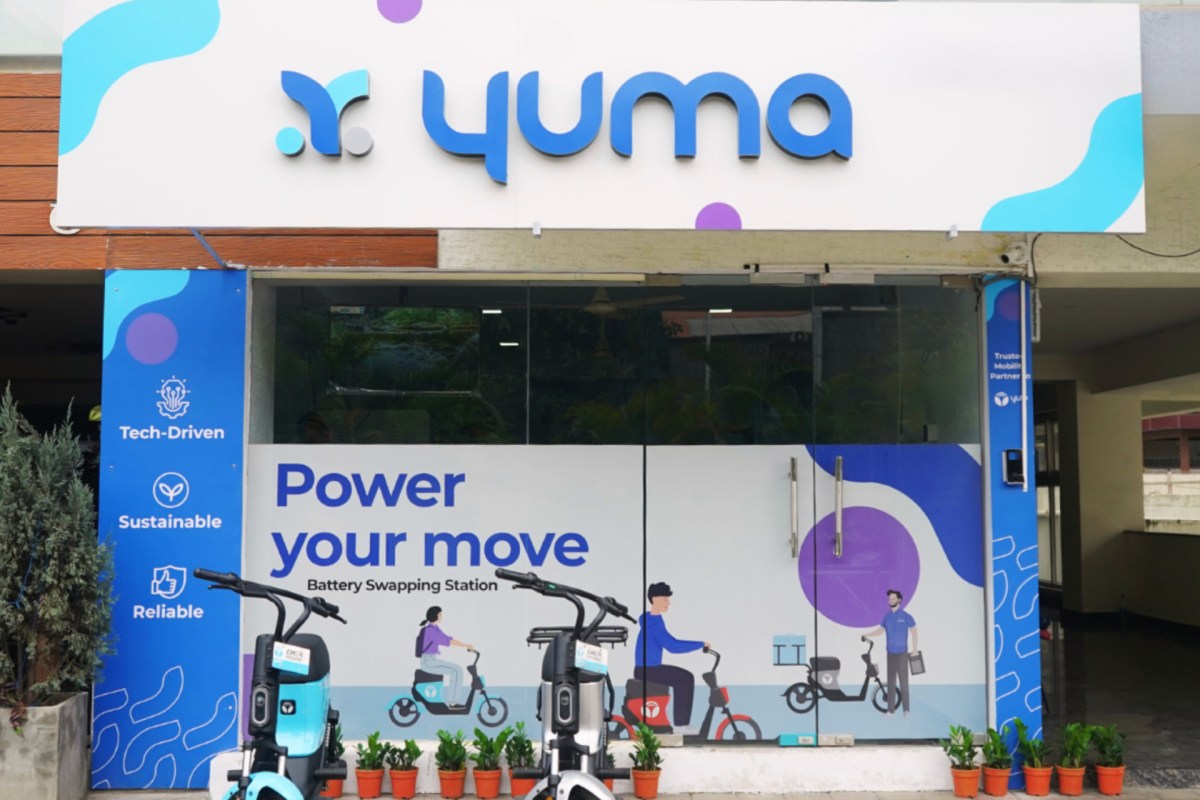
Magna International has invested an additional $35 million in Yuma Energy, an Indian battery-swapping network operator, as the auto parts manufacturer doubles down on its belief in the model’s potential for the Indian market.
Table of Contents
Magna Deepens Investment in Yuma Energy for India’s EV Battery Swapping Network
Canadian auto parts giant Magna International is increasing its investment in Yuma Energy, a Bengaluru-based company that operates a battery-swapping network for electric two- and three-wheelers.
Magna believes that while battery swapping has faced challenges globally, it can succeed at scale in India due to the large number of two- and three-wheelers and a rapidly expanding delivery economy.
This latest funding round follows Magna’s earlier investment when the joint venture was formed, at which time it took a 51% stake.
Yuma Energy was established in early 2023 as a spin-off from the Indian mobility startup Yulu. To date, Yuma has facilitated over 60 million battery swaps and has approximately 100,000 batteries in operation across its network.
Magna’s prior investments in India are focused on Yulu and Yuma. In 2022, Magna committed a total of $77 million, with $25 million directed to Yulu and $52 million to the Yuma joint venture for battery swapping operations.
Yuma’s Battery Swapping Model Caters to India’s Gig Economy
Magna’s increased investment in Yuma Energy is significantly influenced by India’s expanding gig economy. Delivery riders often experience substantial downtime and revenue loss while charging their electric vehicles (EVs).
According to Yuma managing director Muthu Subramanian, currently, only about 10% to 15% of vehicles utilized by gig workers in India are electric. This indicates a substantial market opportunity for companies like Yuma if more riders transition from gasoline-powered vehicles.
“With Indian gig workers’ high runtime on a daily basis, an EV makes absolute sense in terms of cost of ownership,” Subramanian stated. He emphasized that vehicle uptime is critical for these workers.
Yuma targets high-mileage riders by offering battery swapping as a more practical alternative to fast charging. Subramanian explained that a battery can be swapped in under two minutes. In contrast, even a 20- to 30-minute fast charge removes a rider from service and requires more extensive infrastructure to serve multiple vehicles.
Yuma’s Growth Trajectory and Infrastructure Expansion
Subramanian acknowledged that establishing this convenient battery-swapping service is costly, as Yuma must maintain available batteries and infrastructure in anticipation of user demand. “It’s a capital-intensive business, and the unit economics will play out at scale,” he said.
While Yuma is not yet profitable, some of its older swapping stations have achieved EBITDA positivity. The company operates more than 400 stations, equipped with over 2,500 charging units.
For the financial year ending in March 2026, Yuma reported revenue of approximately ₹1 billion, equivalent to about $10.5 million. The company aims to reach EBITDA break-even within the next two quarters.
To achieve this, Yuma plans to invest the majority of the new capital from Magna into expanding its swapping infrastructure. The company intends to double its current fleet of approximately 100,000 batteries within the next 12 to 18 months.
Diversification Beyond Yulu and Future International Plans
Yulu remains the primary user of Yuma’s battery-swapping services, accounting for the majority of the 60 million lifetime swaps. However, this dependency is decreasing, with non-Yulu customers contributing 15% to 20% of swaps in the most recent quarter, according to Subramanian.
Beyond Yulu, Yuma currently serves more than five other fleets. Its batteries are integrated with over 10 vehicle platforms from manufacturers including Kinetic Green, Motovolt, BGauss, and Quantum Energy. Yuma anticipates that non-Yulu customers will represent about 25% of its swaps within the next two years.
Yuma operates its battery-swapping network across 18 Indian cities. With the recent funding, the company plans to expand its reach to Chennai and Pune and add more stations in its existing operational cities.
While India will remain Yuma’s primary focus for the next 12 to 18 months, the company has long-term plans to expand internationally. Subramanian indicated that Southeast Asian markets like Vietnam and Thailand, along with parts of Africa, could be potential targets due to their significant two-wheeler markets, though no specific discussions have begun.
Yuma distinguishes itself by designing and manufacturing its own battery packs and charging units, giving it control over both hardware and network management. Battery packs are produced in Chennai, and charging units are manufactured in Bengaluru.
Frequently Asked Questions
What is the total amount of Magna’s new investment in Yuma Energy?
Magna International is investing an additional $35 million in Yuma Energy. This capital injection is intended to fuel Yuma’s infrastructure expansion and battery fleet growth.
How many battery swaps has Yuma Energy completed?
Yuma Energy has completed over 60 million battery swaps to date across its network. The company aims to double its battery fleet in the coming 12 to 18 months.
Which cities does Yuma Energy currently operate in?
Yuma Energy’s battery-swapping network is currently active in 18 Indian cities, including major locations like Bengaluru, Mumbai, Delhi, and Kolkata, with plans to expand to Chennai and Pune.
What is Yuma Energy’s strategy for future growth?
Yuma Energy plans to use the new investment to expand its infrastructure and battery fleet. The company also aims to increase its non-Yulu customer base to 25% of its swaps within two years and is considering international expansion.
